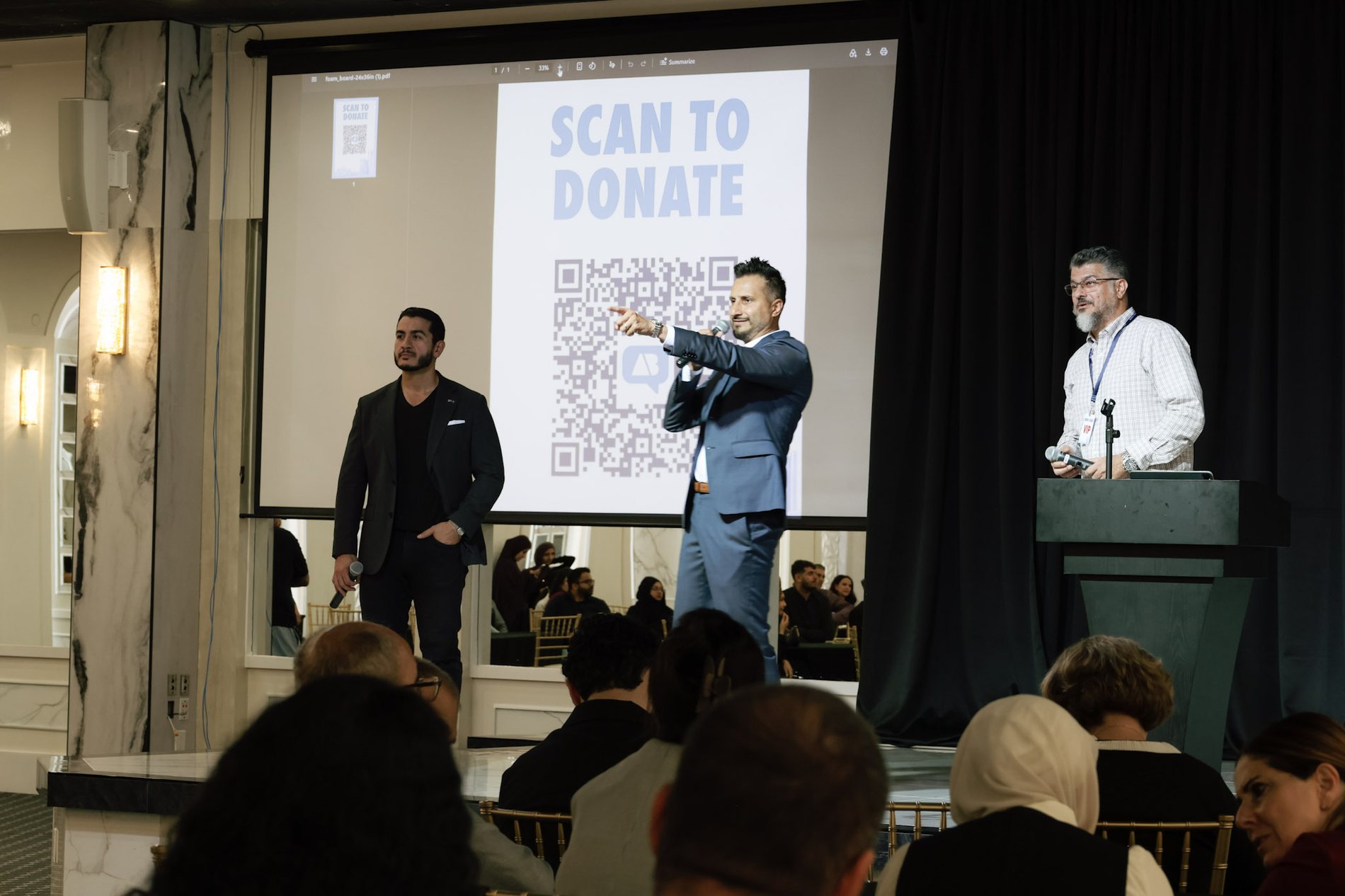
The campaign video ended, the screens went dark, and I walked out in front of a packed room of Abdul El-Sayed supporters at the Qube in Fullerton. One of the first things I told them was the truth: I had been told that if this room didn’t come through tonight, we could lose a United States Senate seat.
“So… no pressure.”
The room came through. By the end of the night, Orange County had delivered a remarkable evening for the Abdul for Michigan Victory Fund, with most of it raised live in the room in a single night.
It was an honor to be asked to emcee and lead the fundraising for Dr. Abdul El-Sayed’s Orange County visit on September 29th, as he heads into his November race for the U.S. Senate in Michigan. Here’s how the night came together, and a few things I learned along the way.
The prep nobody sees
I’ve done my fair share of emceeing, hosting, and lead fundraising at this point, so the preparation has become second nature. But second nature isn’t the same as easy. A night like this runs on homework the audience never sees.
Know the subject. I first met Abdul in 2018, when he ran for governor of Michigan, and I’ve followed him since. Even so, I went deep: his story, his record, the things he’s proud of, and the things people get wrong about him.
Know the goal. An emcee who doesn’t know the numbers is just a guy with a microphone. I knew what we needed to raise, what had already come in, and where I wanted to start the ask.
Know the room. This crowd was mostly Muslim, with a meaningful number of non-Muslim friends and supporters. That shapes everything, from how you open to how you time the program. We built Maghrib, the sunset prayer, right into the evening, and the formal program started after it.
Knowing the room also means meeting it before the program starts. As people walk in, I make a point of finding the ones I don’t know yet: the photographer, the A/V crew, and most of all the guests and dignitaries who don’t know anyone else there. While I was still testing microphones, three wonderful women walked in, delegates from the California Democratic Party. I introduced myself, we got talking, and by the time I took the stage they weren’t strangers anymore. During my remarks I called each of them out by name, along with the other dignitaries in the room, and gave a shout-out to a few friends of mine who are running for office next year. People remember being seen. That kind of affability is a big part of what I bring as a host.
Know what not to say. I kept a list of lines I would not touch. The biggest rule: Abdul’s applause lines belong to Abdul. My job was to warm up the room for him, not to steal his best moments.
Write long, then cut. I rewrote my opening late into the night before the event. Jokes that were too inside got cut. Lines that sounded cheesy out loud got cut. By the end I had a one-page cheat sheet with the run of show, the giving levels, and every name I needed to thank.
Home-field advantage
Lucky for me, this was a home game. I’ve spent the last 25 years volunteering in leadership roles with nonprofits across Orange County, and along the way I’ve built a network of people who show up for each other. Walking onto a stage where I know a good chunk of the room changes everything. It lets you relax, and it turns crowd work from a gamble into a gift.
My favorite moment of the opening came straight from that. I spotted a table of ladies I know who had just gotten back from a girls’ trip to Mallorca. So I pointed out, very respectfully, that if they could afford fancy dinners on an exotic Mediterranean island, a generous gift each for Abdul really shouldn’t be an issue.
It got one of the biggest laughs of the night. That’s the kind of line you can only deliver when you actually know the people you’re teasing.
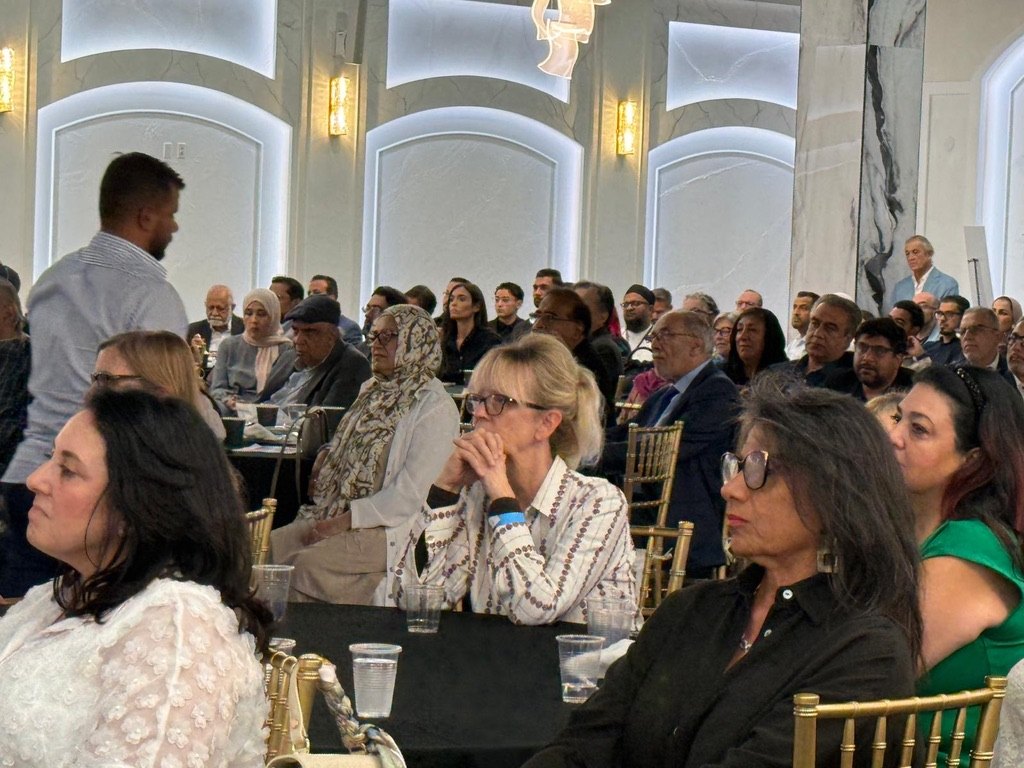
A home game. Part of the room at Meridian Qube.
The night
The evening started at 5:30 with a private hour-long meet-and-greet with Abdul for special guests. I helped coordinate it and then corral everyone, using a mix of energy and charm to move them from the private room to the appetizers and eventually into the main hall.
We paused for Maghrib, and then the main program kicked off. A beautifully produced five-minute campaign video played on the two big screens and had the room fired up before I said a word. I walked out, tipped my hat to the video, and got going.
What landed. I told the story of a good friend who called me the day before with a “deeply philosophical question.” He’d supported dozens of candidates over twenty years, and every single one he’d given money to had lost. Should he even come? I asked him, as the great Michael Scott once did, whether he was superstitious or just a little stitious. My advice: come, but just to be safe, let your wife write the check. I also introduced Abdul 2.0, the sharper, fiercer version of the man I met in 2018, who, I informed the room, can absolutely fill out a black V-neck T-shirt.
What didn’t. I had a whole bit built around a rumor that Abdul benches 350. It turns out not enough people had seen the memes. Silence. So I leaned into it: “You guys didn’t see the kid who asked Abdul how much he benches?” A little self-deprecation goes a long way, and the room laughed right along with me.
The part that mattered most. I talked about names. So many of us in that room know the feeling of hearing our names said on the news, or at the airport, with a little something extra in the delivery. We have to own our names with confidence, because they are beautiful names. Abdul’s full name, Abdulrahman, means servant of the Most Merciful, and I told the room that his whole campaign looks to me like mercy turned into policy.
From there, the program built nicely. Dr. Sana Khan welcomed everyone, Dr. Dima Malhas spoke, and then comedian Omar Regan took the stage, worked the crowd into a frenzy, and introduced Abdul. Abdul absolutely killed it. He spoke like a seasoned orator who knows exactly where he’s going.
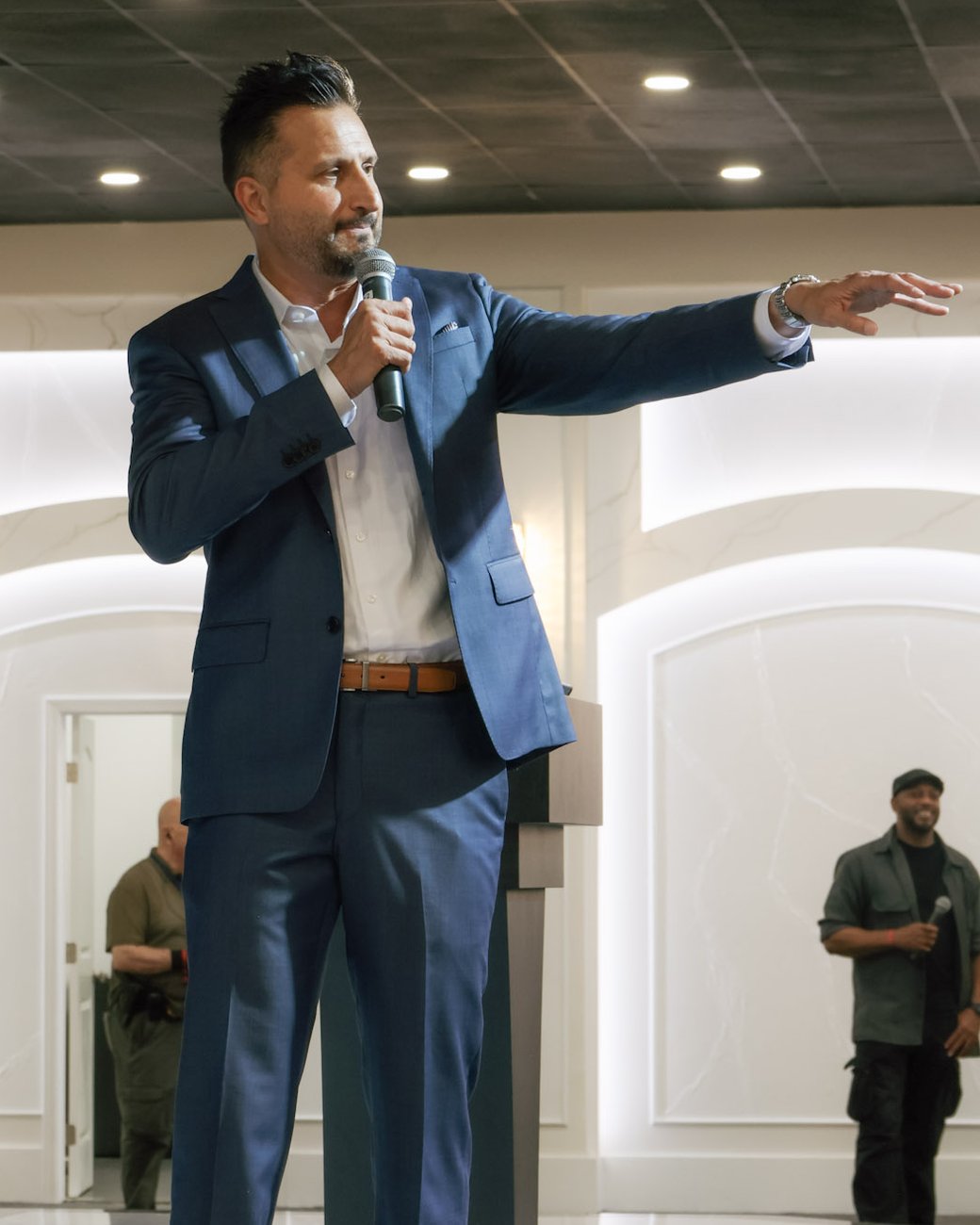
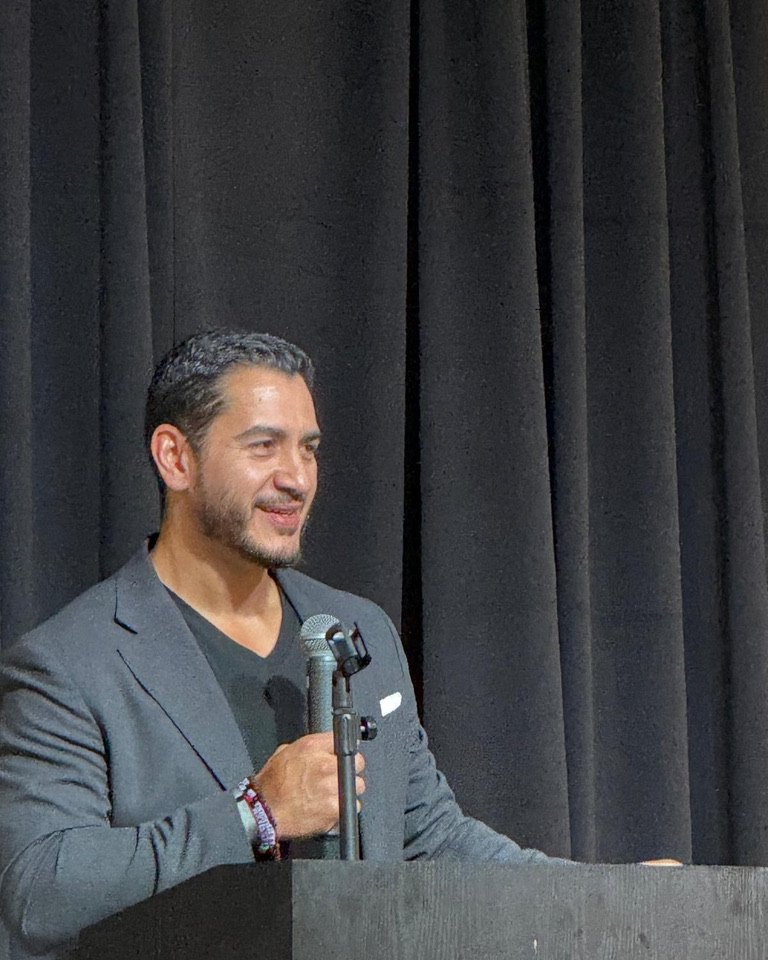
Working the room, and Abdul at the lectern.
The ask
When Abdul finished, I joined him on stage and started the part of the night I’ve grown to love: the live ask, working down through the giving levels.
The first big moment came from a table up front, a family I know well and one of the most generous in our community. Almost immediately they made a big commitment. I looked right at them and asked whether they were sure they didn’t want to go up one more level. They laughed, conceded, and did. Sometimes charm is just knowing exactly how far you can push people who love you.
We had several gracious donors at the higher levels, but the night really came alive further down the levels. Through excitement and banter back and forth with Abdul, the everyday giving levels are where we got most of the room involved. That’s when a fundraiser stops being a few big checks and becomes a whole community saying yes.
Toward the end, I wanted one final push, and the room had gone a little quiet. So I turned to Abdul and asked him about his Rhodes Scholarship essay, where he quoted a verse from the Quran: whoever saves a life, it is as if they have saved all of humanity. I asked him what that verse meant to him now.
He talked about Gaza. About how every single life is precious. And he made a vow to fight to end these wars, and especially the war in Gaza. The room rose to its feet. That moment wasn’t mine. It was his. But it’s the kind of moment a good emcee tries to set up, and I’ll remember it for a long time.
For all the banter and the crowd work, I want to be clear about where the credit belongs. Nothing I do on that stage works without the extraordinary generosity of the people in the room. They give because they believe the cause is worthy of it, and the biggest gifts come from a deep emotional connection to the message, whether that is an organization’s mission or a candidate’s vision. My job is to remind the room of that connection and make it easy to act on. The generosity is theirs.
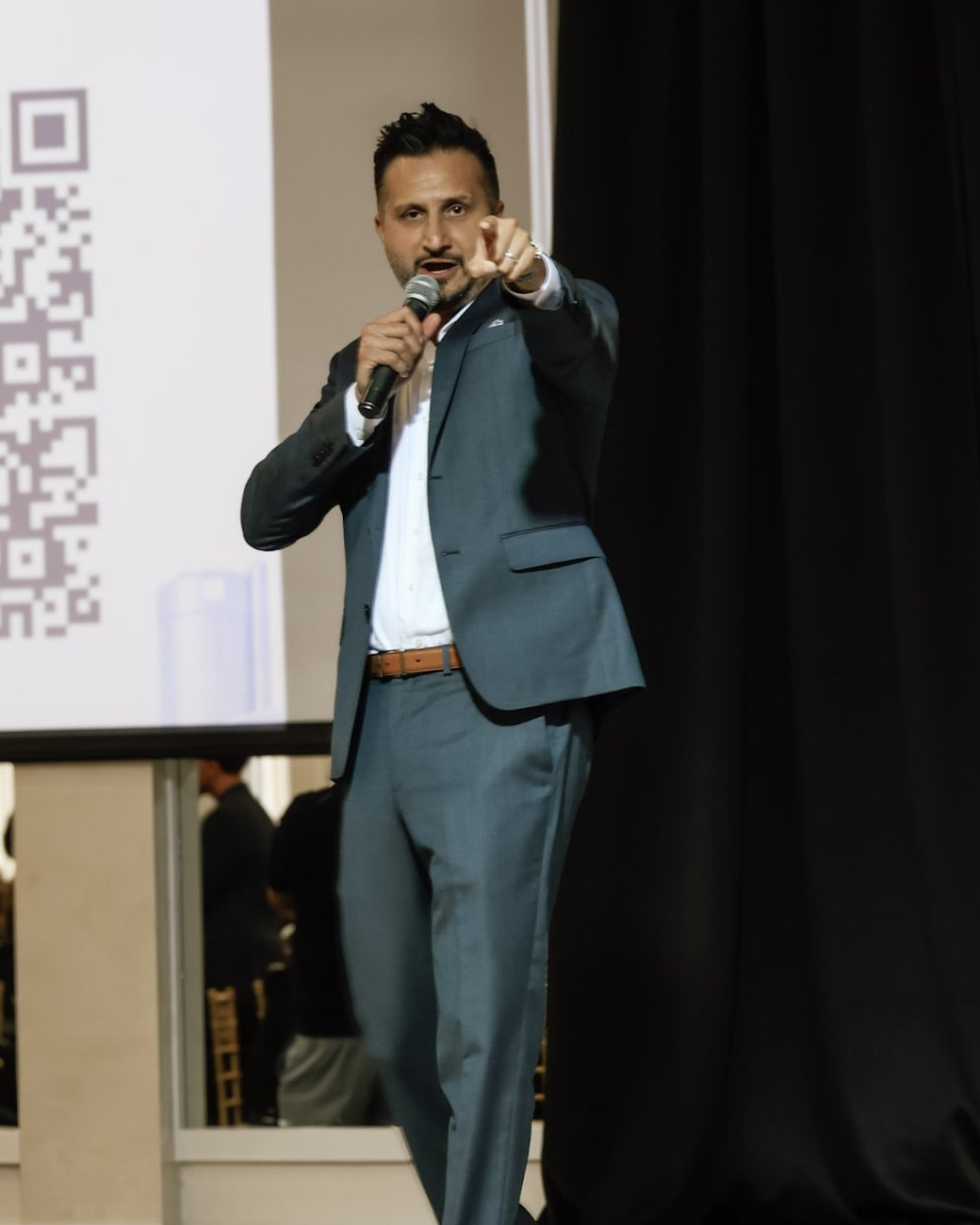
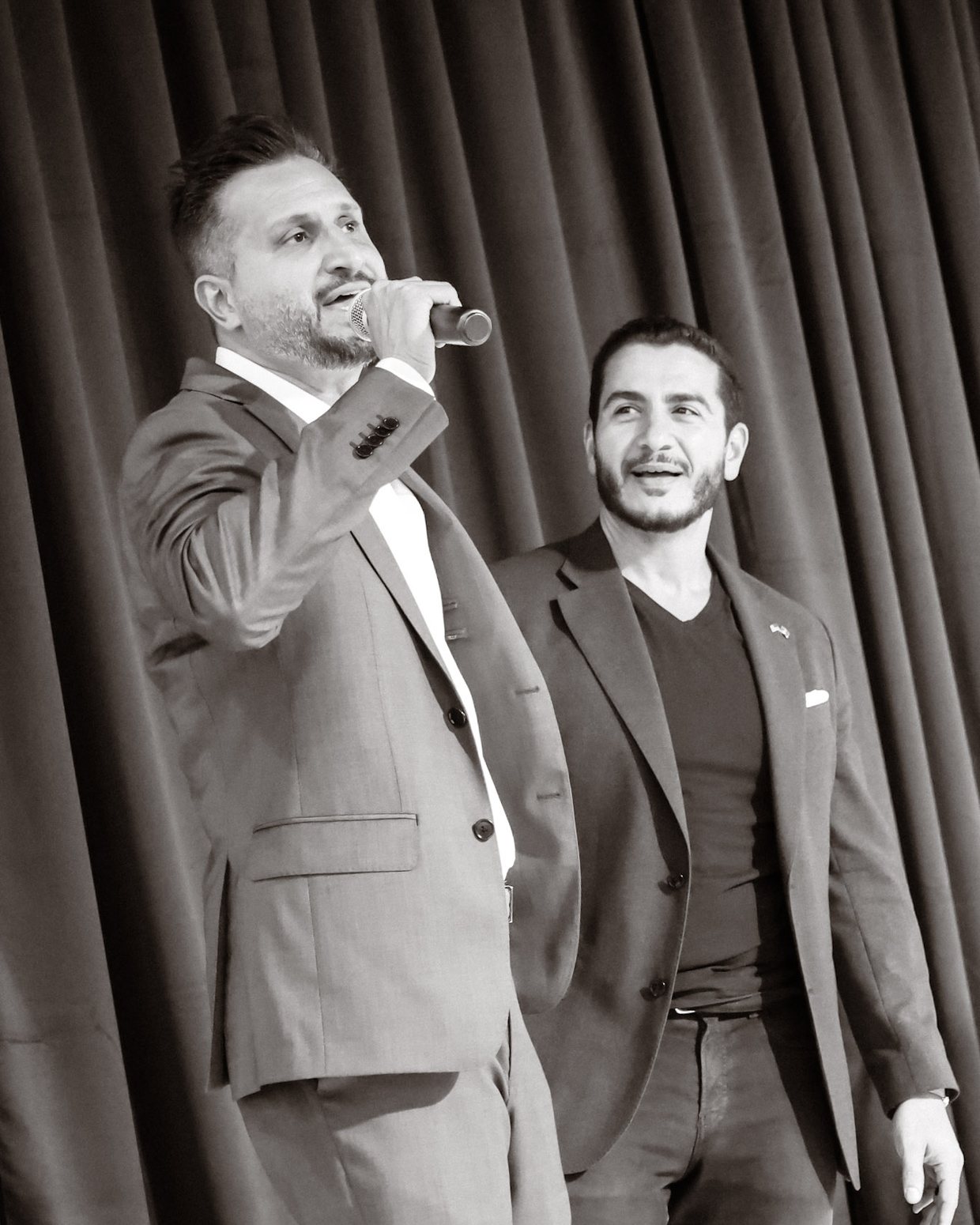
Calling on the room, and on stage with Abdul.
What I took away
If you ever find yourself holding the mic at a fundraiser, here’s what I’d pass along.
- Your do-not-say list matters as much as your script. Know whose moment is whose, and protect the guest of honor’s best lines.
- Crowd work is a fundraising tool. When people feel seen and teased by someone who knows them, they lean in. And people who lean in, give.
- Let silence do the work. After you name a number, stop talking. The pause is uncomfortable, and that’s the point.
- When the room stalls, hand the mic to the why. Numbers move a room for a while. Purpose finishes the job.
- Laugh at yourself first. Every emcee bombs. The ones who recover gracefully keep the room on their side.
Thank you
None of this happens without the people behind the scenes. A special thank you to Dr. Sana Khan, who opened the doors of Meridian Qube and made the whole evening possible. Thank you to the IIOC volunteers, who kept everything moving all night, to Jordan, our photographer, for capturing it, and to the entire Qube staff for taking such good care of us. And to everyone else who made that evening happen: thank you. Most of all, thank you to everyone who gave. You are the reason nights like this work.
My good friend Dr. Faisal Qazi closed out the night, and he closed it beautifully.
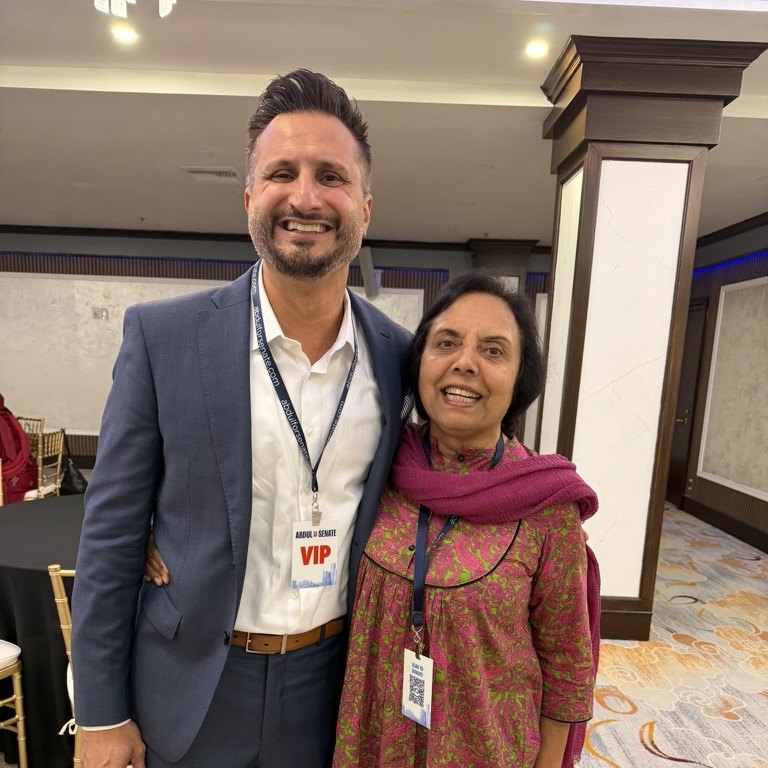
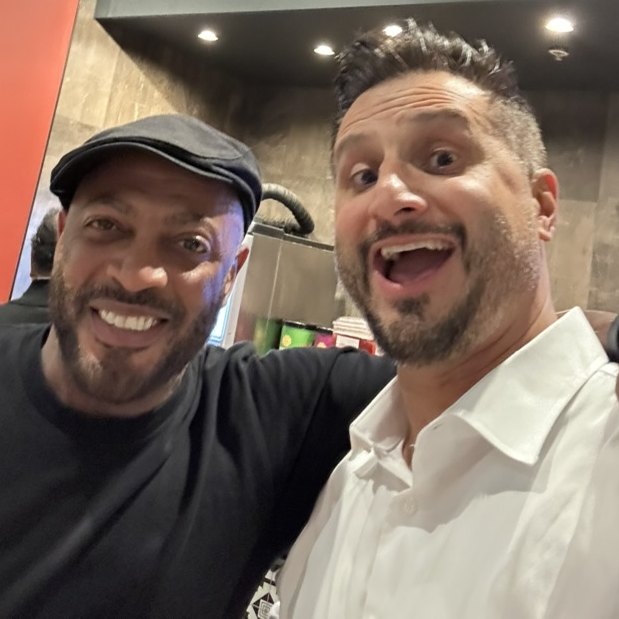
With Rubina Chaudhary, founder of Olive Community Services, and with Omar Regan at the after party.
What’s next?
As the night wound down, more than a few of my close friends pulled me aside and told me I should run for office myself. Standing on that stage next to someone like Abdul does make you ponder. But we’ll save my thought process on that for another time.
For now, I’m just happy to have helped someone I believe is the next big thing in American politics take another big step toward greatness.